Prince Alfred College partnered with Power Tech Energy to implement the Foodie F-100 rapid food waste decomposer, processing up to 100kg of organic food waste daily. The project diverted approximately 2 tonnes of food waste per month from landfill, lowering monthly waste disposal expenses previously exceeding $2,000.

With 2 tonnes of organic waste generated by its canteens and boarding operations each month, Prince Alfred College faces a significant waste management challenge for a leading South Australian school. This volume required over 100 bin collections by contractors, costing the school upwards of $2,000 per month. With all waste destined for off-site landfills, the college lacked both operational control and a mechanism to utilise this waste for educational or sustainable purposes.
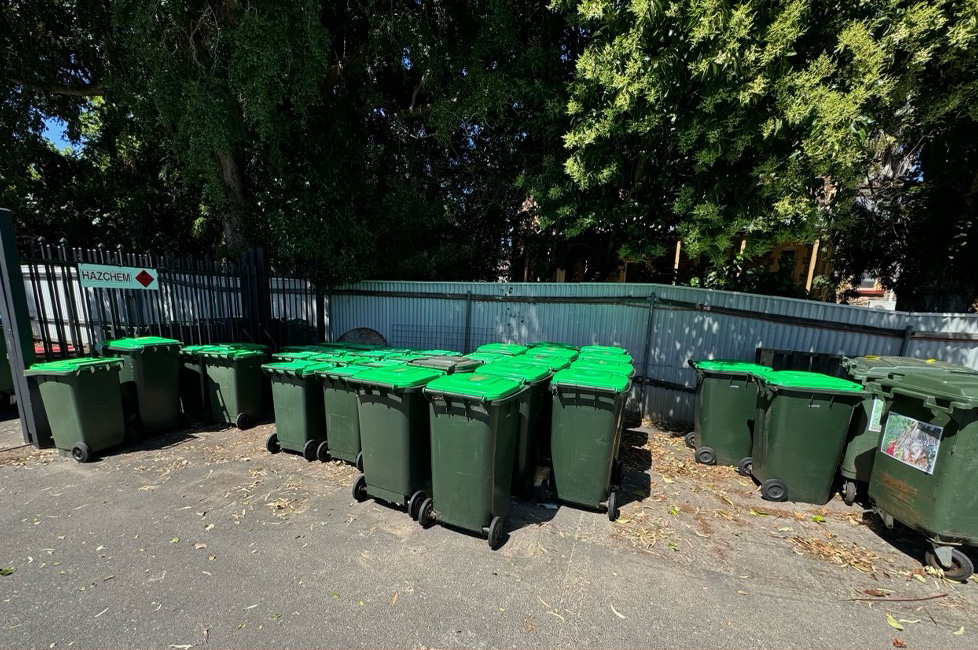
Recognising that landfill-bound food waste accounts for 97% of Australian landfill pollution, Prince Alfred College moved to address its own methane footprint. The school realised that traditional waste disposal was an "out of sight, out of mind" process that offered no educational benefits for its students. To transform this challenge into a learning opportunity, the college required a user-friendly, on-site system capable of processing high volumes, which led to the adoption of Power Tech Energy’s Foodie (F-100 Series).
Power Tech Energy worked with Prince Alfred College to install its Foodie F-100, a rapid food waste management system that processes up to 100 kg of organic waste in a 24-hour cycle. Engineered for commercial environments with high-volume waste streams, the Foodie uses a thermophilic process (operating at 60–80°C) to transform mixed food waste into soil. The Foodie chamber is fully enclosed and odour-controlled, enabling a clean, safe operation, making it well-suited for a busy educational campus.
The system accepts a broad range of organic inputs: cooked and uncooked food, plate scrapings, plant offcuts, and food preparation residues. Mechanical action, thermophilic biological activity, and controlled heat work together to accelerate decomposition in 24 hours, reducing the original volume by approximately 85–90%. The result is a dry, stable, soil-like material enriched with nitrogen, phosphorus, and potassium, ready for use in college gardens and landscaping. Beyond routine inspections and checks, the unit requires 20 minutes of staff attention per day, which fits an environment where safety, simplicity, and predictability matter.

The Foodie F-100 unit was installed within a zone adjacent to key waste-generation points, enabling seamless integration with existing kitchen and facility workflows. Power Tech Energy delivered comprehensive operational training to relevant staff, covering unit functionality, safety protocols, and appropriate waste-segregation practices.

Before the commissioning of the Foodie, the school relied on approximately 100+ bins per month. There was a significant reduction after the Foodie project. The system also reduces the volume of organic waste by 85 – 90%, so most food waste is no longer transported off-site or sent to landfill. By finding a better way to handle this waste, the College is directly reducing the country's methane output and protecting the environment. Fewer collections also mean lower fuel use and indirect operational costs.
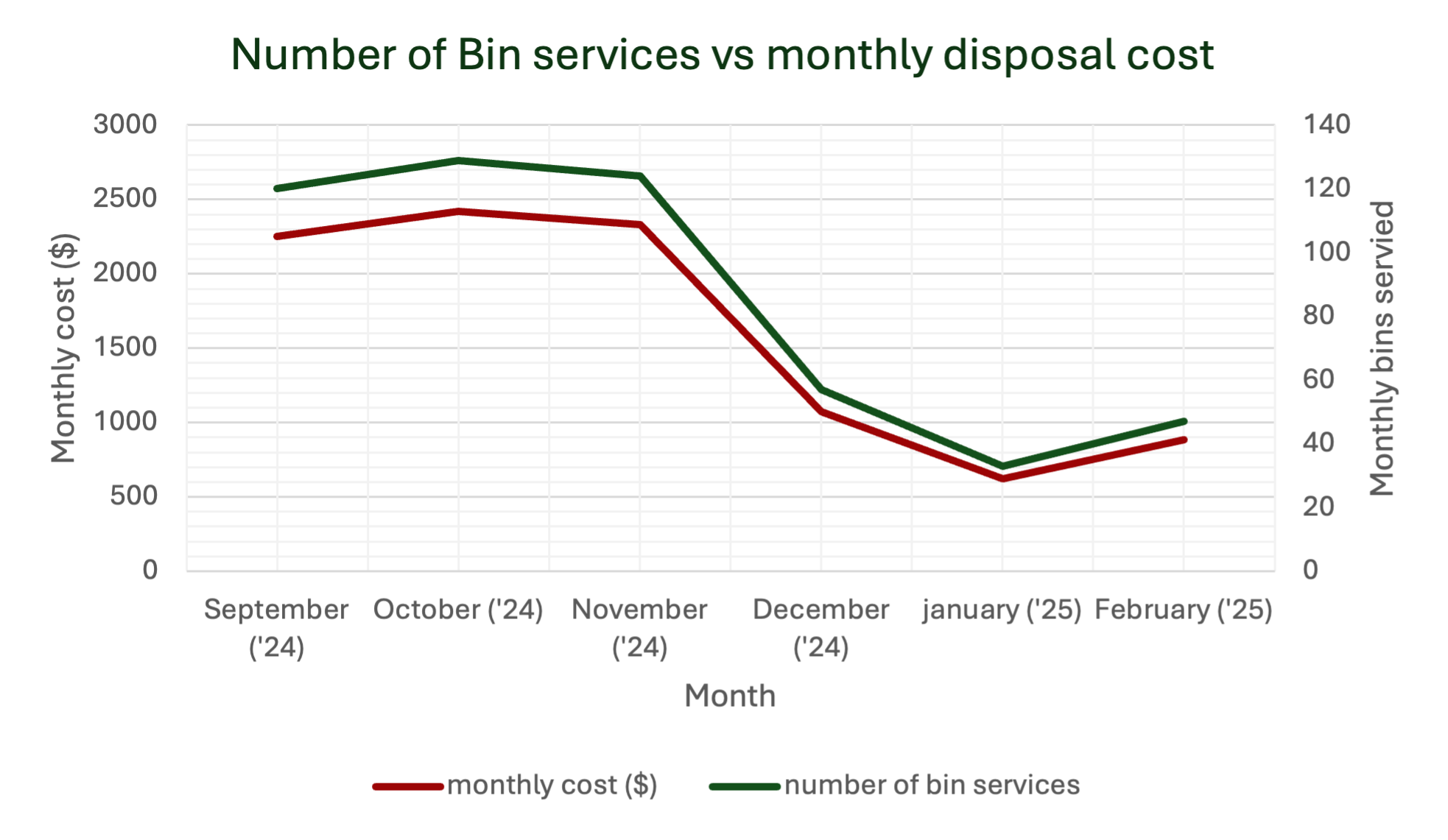
Prince Alfred College has shifted from a traditional waste model to an on-site system: waste becomes soil, soil is used as mulch on college grounds, and students see sustainability in action. The project shows how practical technology can deliver measurable environmental and cost benefits while strengthening the school’s role as a sustainability leader in education.


